
Real World Asset Tokenization and the Evolution of On-Chain Asset Registries
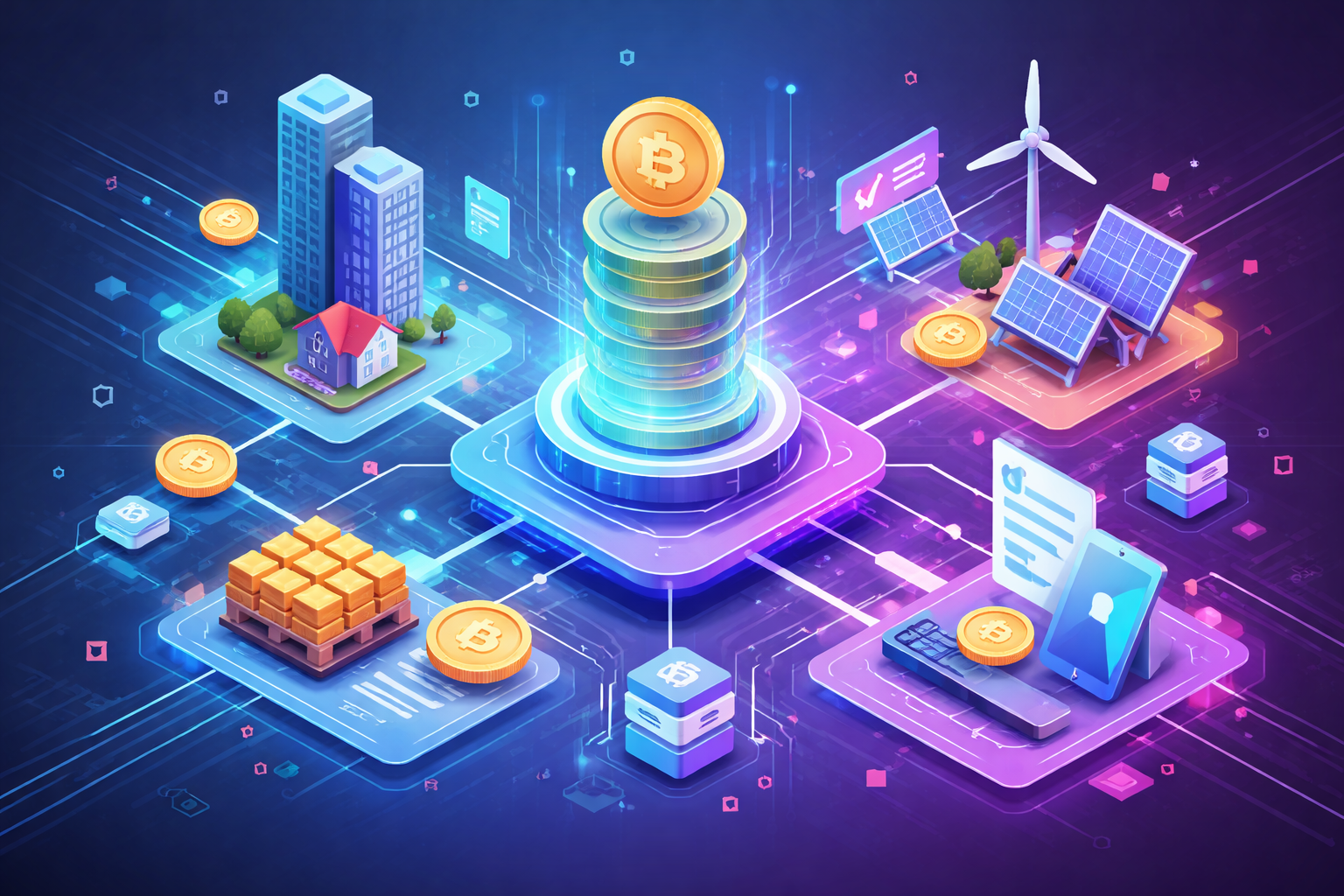
The financial landscape is witnessing a gradual shift as physical and traditional financial assets are being represented in digital form on blockchain networks. Real World Asset Tokenization is at the center of this shift, linking tangible assets such as real estate, commodities, and financial instruments with decentralized systems. At the same time, on-chain asset registries are gaining attention as a method to record ownership, track transfers, and maintain verifiable histories without relying solely on traditional record-keeping institutions.
The relationship between these two concepts is not accidental. As more assets move into tokenized formats, the need for reliable, tamper-resistant registries becomes increasingly relevant. This blog discusses how RWA Tokenization and on-chain registries are evolving together, what challenges remain, and what this means for businesses, investors, and developers entering this space.
Understanding Real World Asset Tokenization
Real World Asset Tokenization refers to the process of converting ownership rights of physical or traditional financial assets into digital tokens recorded on a blockchain. These tokens can represent fractional ownership, debt claims, or usage rights depending on how the asset is structured.
For example, a commercial property can be divided into digital shares, allowing multiple investors to hold portions of the asset without directly managing it. Similarly, commodities such as gold or agricultural goods can be tokenized and traded digitally while still being backed by physical reserves.
RWA Tokenization Company offerings often include asset digitization, compliance support, smart contract development, and integration with custody solutions. These firms help bridge the gap between traditional finance and decentralized systems by providing infrastructure and advisory support.
The growth of Real World Asset Tokenization Services reflects increasing interest from institutions and startups alike. Businesses are no longer limiting blockchain usage to cryptocurrencies. Instead, they are applying it to a broader set of financial and non-financial assets.
What Are On-Chain Asset Registries
On-chain asset registries are blockchain-based systems that store records of asset ownership, transfer history, and related metadata. Unlike traditional registries maintained by centralized authorities, these registries operate on distributed networks where data is shared and verified across multiple participants.
These registries can store:
-
Ownership records
-
Transaction history
-
Asset metadata such as location or certification details
-
Legal documentation references
The purpose of moving registries on-chain is to reduce dependency on fragmented databases and manual record reconciliation. In traditional systems, ownership records are often maintained by multiple entities such as banks, legal offices, and government bodies. This can lead to inconsistencies, delays, and disputes.
By contrast, an on-chain registry provides a single shared record that is continuously updated and validated.
The Link Between Tokenization and On-Chain Registries
RWA Tokenization and on-chain registries are closely connected because tokenized assets require a reliable method of recording ownership and verifying authenticity. Without a proper registry, tokenization loses its credibility.
When an asset is tokenized, the blockchain token represents a claim on the underlying asset. The on-chain registry acts as the reference point that confirms:
-
Who owns the token
-
What asset the token represents
-
Whether the asset exists and is verified
-
How ownership has changed over time
This connection becomes especially relevant in sectors such as real estate, where ownership records are often complex and vary by jurisdiction.
RWA tokenization platform development increasingly includes registry functionality as a standard feature rather than an optional component. Developers and businesses are recognizing that token issuance alone is not sufficient without a robust system for record maintenance.
Evolution of Asset Registries
Traditional asset registries have been in existence for centuries. Land registries, for example, have been used to track property ownership and transfers. However, these systems often rely on paper records or siloed digital databases.
The shift toward on-chain registries has occurred in stages:
Digitization of Records
The first step involved converting physical records into digital formats. Governments and institutions began storing ownership records in centralized databases. While this improved accessibility, it did not eliminate issues such as data silos and limited interoperability.
Integration with Financial Systems
Next, registries were linked with financial systems to support transactions such as mortgages, securities trading, and asset transfers. This integration improved efficiency but still depended on intermediaries.
Introduction of Blockchain
The adoption of blockchain introduced a new method of recording data. Instead of relying on a single authority, data could be shared across a distributed network. This reduced the risk of data manipulation and increased trust among participants.
Emergence of On-Chain Registries
The latest phase involves fully on-chain registries where asset records are directly maintained on blockchain networks. These systems can interact with smart contracts, allowing automated processes such as dividend distribution, compliance checks, and ownership transfers.
RWA tokenization development company solutions are now incorporating these registries to provide a more complete ecosystem for asset management.
Benefits of On-Chain Asset Registries
The adoption of on-chain registries offers several advantages for businesses and investors involved in Real World Asset Tokenization.
Improved Data Integrity
Blockchain-based registries reduce the risk of data tampering. Once a record is added, it cannot be altered without consensus from the network. This creates a reliable history of ownership and transactions.
Faster Transactions
Traditional asset transfers often involve multiple intermediaries and lengthy verification processes. On-chain registries can reduce these delays by providing instant access to verified records.
Reduced Administrative Costs
Maintaining centralized registries requires significant resources. On-chain systems distribute these responsibilities across the network, reducing the need for manual record-keeping.
Greater Accessibility
Tokenized assets recorded on-chain can be accessed by a global audience. This opens up investment opportunities to a wider range of participants.
RWA Tokenization Services often highlight these benefits when promoting blockchain-based asset solutions.
Challenges in Adoption
Despite the advantages, several challenges remain in the adoption of on-chain asset registries.
Regulatory Uncertainty
Regulations for tokenized assets and blockchain registries vary across jurisdictions. This creates uncertainty for businesses looking to implement these systems.
Data Privacy Concerns
While blockchain offers transparency, certain asset information may need to remain confidential. Balancing openness with privacy is a complex issue.
Integration with Legacy Systems
Existing financial and legal systems are deeply entrenched. Integrating blockchain registries with these systems requires careful planning and coordination.
Verification of Physical Assets
Ensuring that a token accurately represents a real-world asset is critical. This requires reliable methods of asset verification and auditing.
RWA tokenization development services are increasingly focusing on addressing these challenges through hybrid solutions that combine on-chain and off-chain components.
Use Cases Across Industries
The combination of Real World Asset Tokenization and on-chain registries is being applied across multiple sectors.
Real Estate
Property ownership records can be stored on-chain, allowing faster transfers and fractional ownership. Investors can buy and sell shares of properties without traditional barriers.
Supply Chain
Assets such as goods and raw materials can be tracked throughout the supply chain. On-chain registries provide visibility into the movement and ownership of these assets.
Financial Instruments
Bonds, loans, and other financial products can be tokenized and recorded on-chain. This allows for more efficient trading and settlement processes.
Art and Collectibles
Ownership of artworks and collectibles can be recorded on-chain, reducing the risk of forgery and improving provenance tracking.
RWA token development plays a significant role in these use cases by creating digital representations of physical assets.
Role of Service Providers
RWA Tokenization Company offerings are expanding to include end-to-end solutions that cover asset digitization, token issuance, and registry management. These providers act as intermediaries between traditional asset owners and blockchain networks.
Services typically include:
-
Asset evaluation and structuring
-
Smart contract development
-
Compliance and legal support
-
Integration with custody solutions
-
Development of on-chain registries
RWA tokenization development company solutions are particularly relevant for enterprises looking to enter this space without building infrastructure from scratch.
Technology Stack Behind On-Chain Registries
The implementation of on-chain registries involves multiple technologies working together.
Blockchain Networks
Public and private blockchains provide the foundation for recording asset data. The choice of network depends on factors such as security, cost, and regulatory requirements.
Smart Contracts
Smart contracts automate processes such as ownership transfers, compliance checks, and revenue distribution.
Oracles
Oracles connect blockchain systems with external data sources. They are used to verify information about physical assets and update on-chain records accordingly.
Storage Solutions
Large datasets may be stored off-chain while references are recorded on-chain. This approach balances efficiency and data availability.
RWA Tokenizaion development efforts often involve integrating these components into a cohesive system.
Future Outlook
The evolution of on-chain asset registries is still in its early stages. However, several trends indicate continued growth.
Institutional interest in Real World Asset Tokenization is increasing, particularly in areas such as real estate and fixed-income products. As more assets are tokenized, the demand for reliable registries will continue to rise.
Governments and regulatory bodies are also beginning to explore blockchain-based registries for public records. This could lead to wider adoption and standardization across industries.
Interoperability between different blockchain networks is another area of focus. As systems become more connected, asset registries will need to support cross-chain interactions.
RWA tokenization platform development is expected to evolve alongside these trends, offering more comprehensive solutions for asset management.
Conclusion
Real World Asset Tokenization and on-chain asset registries are developing in parallel, each supporting the growth of the other. Tokenization provides a method for digitizing ownership, while registries offer a reliable system for recording and verifying that ownership.
Businesses entering this space need to consider both aspects rather than focusing on token issuance alone. Without a dependable registry, tokenized assets may face issues related to trust, compliance, and usability.
RWA Tokenization Services and RWA tokenization development services are addressing these challenges by offering integrated solutions that combine token creation with registry management. As technology and regulations continue to evolve, these systems are likely to become more widely adopted across industries.
For investors and enterprises, the combination of tokenization and on-chain registries presents new opportunities for asset management, investment, and operational efficiency. While challenges remain, ongoing developments suggest a gradual shift toward more digitized and interconnected asset ecosystems.

 English
 French
 Spanish
 Portuguese
 Deutsch
 Turkish
 Dutch
Dutch
 Italiano
 Russian
 Romaian
 Portuguese (Brazil)
 Greek
Greek