
A Practical Guide to Crypto Prediction Markets: Technology, Benefits, and Applications
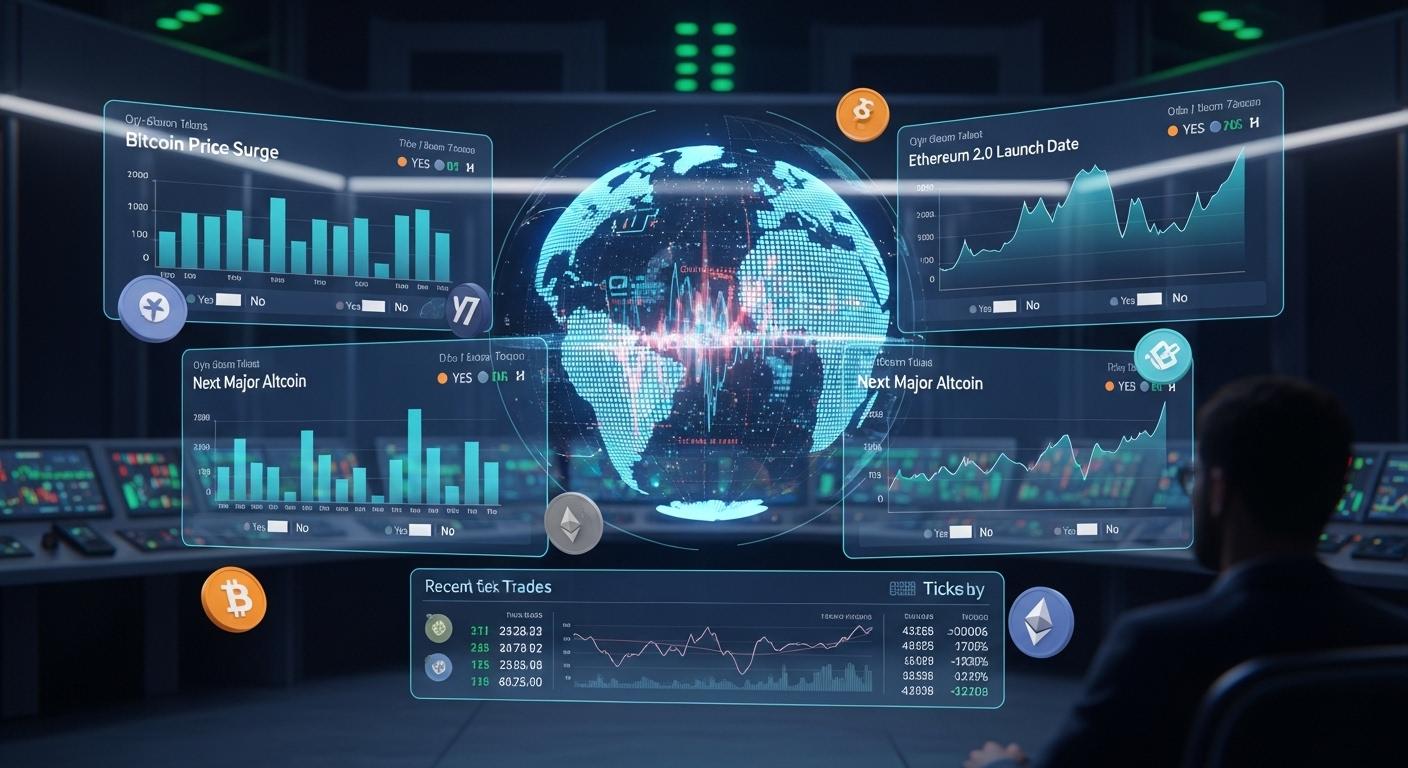
Crypto prediction markets are emerging as one of the most intriguing applications of blockchain technology, blending finance, data aggregation, and decentralized systems into a single framework. At their core, these markets allow individuals to trade on the outcomes of future events, transforming opinions and expectations into real-time, price-driven forecasts. Academic research describes prediction markets as a form of collective intelligence, where large groups contribute information through trading activity to forecast uncertain outcomes.
What makes crypto-based prediction markets different is the infrastructure behind them. Instead of relying on centralized operators, they use blockchain networks, smart contracts, and tokenized assets to manage trading, settlement, and rewards. This creates a system that is transparent, programmable, and often globally accessible. As decentralized finance continues to expand, prediction markets are becoming a powerful tool not only for speculation but also for decision-making and risk assessment.
What Are Crypto Prediction Markets?
A crypto prediction market is a decentralized platform where users trade tokens that represent possible outcomes of future events. These events can range from elections and sports results to financial trends, product launches, or even technological milestones. Each outcome is assigned a price that reflects the market’s collective belief in its likelihood.
Research and industry explanations highlight that participants essentially buy and sell “shares” in outcomes, and the price of those shares fluctuates as new information enters the market. This pricing mechanism turns market activity into a probabilistic signal. For example, if a “Yes” outcome is trading at 70 cents, the market is implying a 70% probability of that event occurring.
Crypto prediction markets build on this concept using blockchain infrastructure. Smart contracts handle trade execution, hold funds securely, and automatically distribute payouts once the outcome is verified. This removes the need for centralized intermediaries and ensures that rules are enforced consistently.
The Technology Behind Prediction Markets
The technology powering crypto prediction markets is a combination of blockchain, smart contracts, tokenization, and oracle systems. Each component plays a specific role in making the system functional and trustworthy.
Blockchain provides the foundation. It ensures that all transactions are recorded immutably and transparently. Every trade, position, and payout is visible on-chain, which reduces disputes and increases accountability.
Smart contracts act as the execution layer. They define the rules of the market, including how trades are processed, how funds are locked, and how rewards are distributed. Because these contracts run automatically, they eliminate the need for manual intervention.
Tokenization enables outcomes to be represented as tradable assets. Each possible result of an event is turned into a token or share that users can buy and sell. This creates a market where probabilities are expressed through price movements.
Oracles provide the connection between blockchain and real-world data. Once an event concludes, the oracle verifies the result and feeds it into the smart contract, triggering settlement. Without reliable oracles, the system would not be able to determine outcomes accurately.
From a development perspective, this entire stack requires careful coordination. Projects offering Crypto Prediction development must integrate smart contracts, oracle systems, token logic, and user interfaces into a seamless experience while maintaining security and scalability.
How Crypto Prediction Markets Work
The lifecycle of a prediction market follows a structured flow:
- A market is created for a specific event with clearly defined outcomes.
- Users purchase shares representing their chosen outcome.
- Prices adjust dynamically based on trading activity and new information.
- The event concludes, and the result is verified through an oracle.
- Smart contracts automatically distribute payouts to winning participants.
This process is efficient because it combines trading and forecasting into a single mechanism. Unlike surveys or expert panels, prediction markets incentivize participants to act on their beliefs with real capital. As a result, they often produce more accurate and timely forecasts.
Research suggests that prediction markets can aggregate dispersed information into actionable probabilities that guide decision-making and risk management. This makes them valuable beyond speculation, especially in areas where accurate forecasting is critical.
Key Benefits of Crypto Prediction Markets
Crypto prediction markets offer several advantages that explain their growing popularity.
The first is transparency. All transactions and outcomes are recorded on a blockchain, making it easier to verify market activity and reduce manipulation risks. Unlike traditional systems, where data may be opaque, users can independently audit the process.
The second is accessibility. Anyone with a crypto wallet can participate, regardless of geographic location. This global participation enhances the diversity of information, which improves the quality of predictions.
The third is efficiency. Smart contracts automate trading and settlement, reducing delays and operational costs. Markets operate continuously, allowing users to respond to new information in real time.
The fourth is incentive alignment. Participants are financially motivated to make accurate predictions. This creates a system where truthful information tends to be rewarded, improving the reliability of outcomes.
These benefits are why businesses are increasingly exploring prediction markets as tools for analytics and strategy. A well-designed Crypto Prediction development service can turn user insights into measurable signals that inform decisions across industries.
Real-World Applications of Prediction Markets
The applications of crypto prediction markets extend far beyond simple betting. One of the most significant use cases is political forecasting. Markets can aggregate public sentiment and expert analysis into a single probability metric, offering insights into election outcomes or policy changes.
Another important application is financial forecasting. Prediction markets can be used to estimate interest rate changes, market trends, or economic indicators. Because they incorporate diverse perspectives, they can sometimes outperform traditional models.
In the corporate world, prediction markets are used for internal decision-making. Companies can create markets to forecast product success, project timelines, or sales performance. By incentivizing employees to participate, organizations can tap into collective knowledge more effectively.
They also play a role in risk management. Event contracts, as defined by regulators, allow participants to hedge against specific outcomes, such as economic shifts or environmental events. This transforms prediction markets into tools for financial protection rather than just speculation.
Challenges and Limitations
Despite their potential, crypto prediction markets face several challenges. One major issue is regulatory uncertainty. Governments are still determining how to classify and oversee these platforms, especially when they resemble financial derivatives or gambling systems.
Another challenge is market manipulation. While blockchain transparency helps, research shows that prediction markets can still be influenced by large trades or coordinated activity. Ensuring fairness requires robust market design and monitoring.
Oracle reliability is also critical. If the data source used to determine outcomes is inaccurate or compromised, the entire system can fail. This makes oracle design one of the most sensitive aspects of prediction market infrastructure.
Liquidity is another concern. Smaller markets may struggle to attract enough participants, leading to inaccurate pricing and reduced usefulness. Building deep and active markets is essential for long-term success.
For these reasons, working with a capable Crypto Prediction development company is essential for projects aiming to launch sustainable platforms. Development is not just about building functionality but about designing systems that balance incentives, security, and usability.
The Future of Crypto Prediction Markets
The future of crypto prediction markets is closely tied to the broader evolution of decentralized finance and Web3. As blockchain infrastructure improves, these markets are likely to become more scalable, efficient, and user-friendly.
Integration with other DeFi protocols could unlock new possibilities. For example, prediction market positions could be used as collateral in lending systems or combined with derivatives for advanced financial strategies. This would further blur the line between forecasting and finance.
There is also growing interest from institutional players. As prediction markets prove their ability to generate accurate insights, they may become valuable tools for research firms, hedge funds, and policymakers.
However, long-term growth will depend on addressing regulatory concerns and improving user experience. Clear rules, better interfaces, and stronger security measures will be necessary to bring prediction markets into mainstream adoption.
Conclusion
Crypto prediction markets represent a powerful intersection of finance, technology, and collective intelligence. By transforming opinions into tradable assets, they create a system where information is continuously aggregated and reflected in market prices. Blockchain technology enhances this model by adding transparency, automation, and global accessibility.
From political forecasting to corporate decision-making, these markets offer practical value across multiple domains. At the same time, they introduce new challenges related to regulation, security, and market design.
Ultimately, prediction markets are more than speculative platforms. They are information systems powered by economic incentives. As the technology matures, they are likely to play an increasingly important role in how individuals and organizations understand and navigate uncertainty.

 English
 Arabic
 French
 Spanish
 Portuguese
 Deutsch
 Turkish
 Dutch
Dutch
 Italiano
 Russian
 Portuguese (Brazil)
 Greek
Greek